
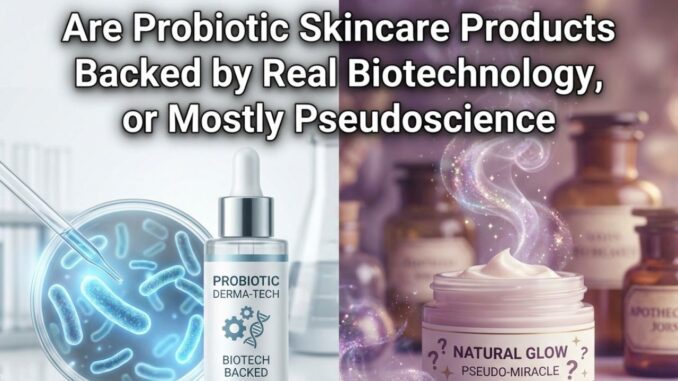
The skin microbiome is one of the most rapidly advancing areas of dermatological research. In the past decade, scientists have developed a detailed understanding of the trillions of bacteria, fungi, viruses, and archaea that inhabit the skin surface, and have begun to map the relationships between the composition of these microbial communities and skin health outcomes. Disruptions to the skin microbiome have been associated with conditions including eczema, psoriasis, acne, and rosacea. The scientific interest in skin microbiome research is genuine, peer-reviewed, and growing rapidly.
Into this genuine scientific landscape has stepped an enormous and expanding consumer skincare category: probiotic skincare. Products marketed as containing live bacteria, bacterial extracts, fermented ingredients, prebiotics, postbiotics, or “microbiome-balancing” formulations now occupy significant shelf space in pharmacies, beauty retailers, and online marketplaces. The global probiotic skincare market was valued at approximately $874 million in 2024 and is projected to reach $2.7 billion by 2033. The question this essay addresses directly is whether these products are backed by the real biotechnology that skin microbiome science has produced, or whether the scientific language is being used to lend credibility to products whose efficacy is largely undemonstrated.
The Case For: The Science of the Skin Microbiome Is Real and Relevant
The foundational science underlying probiotic skincare claims is not manufactured. Research into the skin microbiome has produced genuine insights with legitimate therapeutic implications. Staphylococcus epidermidis, a commensal bacterium naturally present on healthy skin, produces antimicrobial peptides that inhibit the growth of Staphylococcus aureus, a pathogenic species associated with eczema flares and skin infections. Disruption of S. epidermidis colonisation, through over-sanitisation, antibiotic use, or harsh cleansing, has been associated with increased susceptibility to S. aureus colonisation and worsening eczema severity. This is real, peer-reviewed microbiology with direct skin health implications. The concept that maintaining or restoring a healthy microbial community on the skin could improve skin outcomes is scientifically coherent, not pseudoscientific.
Clinical research supports specific applications in well-defined conditions. A 2024 study demonstrated that applying a topical suspension of Staphylococcus hominis, a commensal skin bacterium, reduced S. aureus colonisation and eczema severity in patients with atopic dermatitis. This is a controlled clinical trial showing a measurable therapeutic effect from a specific bacterial application. Research from the Nakatsuji group has demonstrated that topical application of specific commensal strains can meaningfully alter the skin microbiome composition, with downstream effects on inflammatory markers and disease severity in eczema patients.
The postbiotics category, referring to the bioactive compounds produced by bacteria rather than live bacteria themselves, also has genuine scientific grounding. Bacterial fermentation produces a range of compounds including short-chain fatty acids, antimicrobial peptides, enzymes, and vitamins that have demonstrated effects on skin barrier function, inflammation, and pathogen inhibition. Fermented ingredients in skincare, including fermented yeast extract, fermented Lactobacillus, and similar preparations, can contain these bioactive compounds at concentrations sufficient to produce measurable effects. The fermentation process itself can also enhance the bioavailability and skin penetration of active ingredients in the base formulation, adding a genuine mechanism by which fermented ingredients might outperform their non-fermented equivalents.
The Case Against: The Marketing Has Comprehensively Outpaced the Evidence
The scientific reality of the skin microbiome does not automatically validate the claims of the products marketed under its banner. The case against most probiotic skincare products as genuine biotechnology rests on a straightforward empirical argument: the evidence for the specific products in the consumer market is dramatically weaker than the evidence for the underlying science would imply.
The first and most important problem is viability. The defining characteristic of a probiotic, as distinguished from a prebiotic or postbiotic, is that it contains live microorganisms that confer a health benefit on the host. Maintaining live bacterial cultures at effective concentrations in a cosmetic product, packaged in conditions accessible to consumers, stored at room temperature, and stable over a shelf life of twelve to thirty-six months, is genuinely difficult. Most product formulations contain preservatives, pH levels, and packaging conditions that are inhospitable to bacterial viability. Independent laboratory analyses of products marketed as containing live probiotics have consistently found that viable bacterial counts are far lower than claimed, or that the bacteria are not viable at all by the time of consumer use. A product that once contained live bacteria and now contains only bacterial fragments or lysates is, technically, a postbiotic preparation, not a probiotic, regardless of what the label claims.
The clinical evidence gap for consumer probiotic skincare products specifically, as distinct from the clinical evidence for the underlying science, is substantial. The clinical trials that demonstrate meaningful effects from topical bacterial interventions use specific, well-characterised bacterial strains at defined concentrations, administered in controlled conditions, to patients with diagnosed skin conditions. The consumer skincare products in the market typically do not specify the strain used, do not disclose the concentration, do not target defined patient populations with diagnosed conditions, and have not been tested in controlled clinical trials against placebo. This is not a minor methodological gap. It is the entire difference between a scientifically grounded therapeutic claim and an unsubstantiated marketing claim that borrows the language of science without the substance.
Regulatory oversight of probiotic skincare claims is also notably limited in most markets. In the United States, cosmetics are regulated by the FDA under a framework that does not require pre-market efficacy evidence. A cosmetic product can claim to “balance the skin microbiome” or “support skin health” without any clinical evidence that it does so, provided the claim does not explicitly assert treatment of a disease. In the EU, the substantiation standard for general claims about skin feel, appearance, and microbiome “balance” is significantly lower than the evidence standard applied to pharmaceutical or medical device claims. This regulatory gap creates significant space for products to make scientifically-adjacent claims without scientifically-adequate evidence.
What the Evidence Actually Supports
The evidence supports a nuanced conclusion that the field of skin microbiome science is genuinely producing therapeutically relevant insights, and that a small number of well-characterised probiotic and postbiotic skincare interventions, primarily in the context of specific diagnosed skin conditions, have demonstrated meaningful clinical effects. The much larger consumer market of products marketed under probiotic, prebiotic, and microbiome-balancing terminology is operating substantially on the credibility of that underlying science rather than on evidence specific to the consumer products themselves.
The viability problem is real and underappreciated by consumers. Independent analyses have confirmed that many products marketed as containing live probiotics either never contained viable bacteria at useful concentrations or lose viability rapidly under normal storage and use conditions. Consumers paying significant premiums for “live culture” skincare formulations are, in most cases, purchasing postbiotic or prebiotic products at best, regardless of how they are labelled.
The ingredient-specific evidence is more promising for postbiotic and fermented ingredient applications. Niacinamide, ceramides, and hyaluronic acid, which are produced or concentrated through fermentation processes, have robust evidence bases for their skin benefits. Fermented yeast extracts have demonstrated effects on skin texture and hydration in controlled studies. The most scientifically credible probiotic skincare products are those that use well-characterised postbiotic preparations, disclose their active ingredients and mechanisms, and make specific, evidence-supported claims rather than broad “microbiome balance” language.
The most clinically validated applications are in dermatological rather than cosmetic contexts: topical applications targeting S. aureus reduction in atopic dermatitis patients, under dermatological supervision, using specific characterised strains. These applications are genuinely supported by the science, are beginning to enter clinical practice, and represent the leading edge of where skin microbiome research translates into real therapeutic benefit. They are distinct from, and substantially better evidenced than, the consumer cosmetic products that occupy the bulk of the probiotic skincare market.
The Verdict: Real Science, Mostly Unvalidated Products
Probiotic skincare sits at the intersection of genuine biotechnology and substantial pseudoscience, with the proportion of each depending heavily on which specific product category and which specific claims are being evaluated.
The skin microbiome science that underlies the category is real, growing, and producing therapeutically relevant insights. Specific, well-characterised probiotic and postbiotic interventions for defined skin conditions, particularly atopic dermatitis, have demonstrated clinical efficacy in controlled trials and represent genuine biotechnology applications rather than marketing constructs.
The large consumer skincare market operating under the probiotic umbrella is a different matter. Most consumer probiotic skincare products lack viable bacteria at useful concentrations, have not been tested in controlled clinical trials, do not disclose the specific strains or concentrations used, and make broad claims that go substantially beyond what the evidence for those specific products supports. The regulatory environment permits these claims with limited scrutiny, and the genuine scientific credibility of skin microbiome research provides effective cover for products that have not earned that credibility through their own evidence.
The honest consumer verdict is that if a probiotic skincare product discloses its specific bacterial strain, the concentration, and can point to clinical evidence for that specific preparation, it deserves serious consideration, particularly for inflammatory skin conditions. If a product markets itself with “microbiome-balancing” language, fermented ingredient claims, or probiotic terminology without that specificity, it is borrowing the credibility of a scientific field it has not contributed to, and the premium price is not justified by demonstrable evidence. The same lesson applies across the biotechnology sector: the scientific foundation of a field and the quality of the products marketed under its name are not the same thing, and distinguishing between them is the essential skill in any market where genuine science and enthusiastic marketing share the same vocabulary. This pattern connects directly to the broader question of whether at-home genetic testing kits are genuinely useful or selling false hope, where a legitimate scientific platform similarly supports a consumer market of products whose individual value varies enormously.
Leave a Reply