
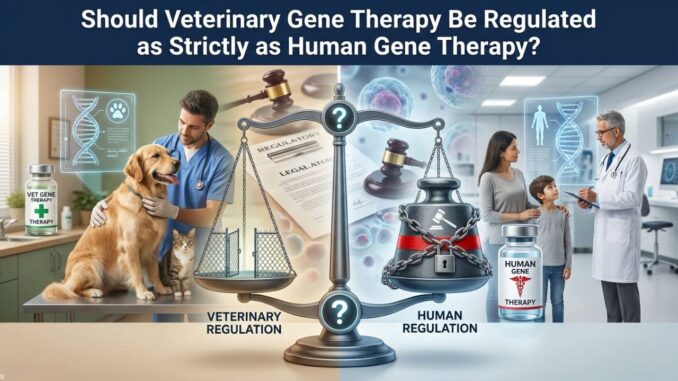
Gene therapy is moving from the pages of science fiction into clinical reality faster than most people outside the medical research community appreciate. In human medicine, gene therapies for conditions including spinal muscular atrophy, certain forms of haemophilia, and some inherited blindness disorders have received regulatory approval, and the pipeline of conditions being addressed is expanding rapidly. In veterinary medicine, the pace of development is accelerating alongside it. Companion animals suffer from many of the same genetic diseases that affect humans, including heritable eye disorders, certain muscular dystrophies, and metabolic conditions, and the same gene therapy techniques used in human medicine are being explored and in some cases already being used in dogs and cats.
This raises a regulatory question that is generating increasing debate within the veterinary medicine and bioethics communities: should veterinary gene therapy be regulated as strictly as human gene therapy? The question is not as simple as it might first appear. There are compelling arguments on both sides, and the current regulatory landscape reflects a tension between enabling animal health innovation and applying the precautionary rigour that any gene-level intervention demands.
The Case For Equally Strict Regulation
The case for strict regulatory oversight of veterinary gene therapy rests on several interrelated arguments, and the strongest of them has nothing to do with the welfare of the animals being treated.
The most compelling argument is that companion animals, particularly dogs, serve as a critical translational bridge between preclinical laboratory research and human clinical trials. Dogs naturally develop many of the same diseases as humans, including cancer, diabetes, heart disease, and heritable neurological conditions, and they share roughly 75% of the same protein-coding genome. This biological similarity makes the dog a more predictive model for human outcomes than the mouse models typically used in early-stage research. When a gene therapy technique is tested and refined in dogs before moving to human trials, the regulatory safety data generated from that veterinary application directly informs the risk profile of the subsequent human treatment. If veterinary gene therapy applications that serve as de facto preclinical human studies are subject to substantially lower regulatory standards than the human trials they precede, the safety assurance chain is compromised. A gene therapy side effect that would be caught and investigated in a human clinical trial with rigorous adverse event reporting may be missed or underweighted in a veterinary application with less formal oversight, and the absence of that safety signal could allow a risky technique to progress further toward human use than the evidence warrants.
There are also animal welfare arguments for strict regulation that are independent of the human medicine implications. Gene therapy interventions at the DNA level can have off-target effects that are unpredictable, heritable, and potentially transmitted through breeding to future generations of the animal. A dog or cat that receives a gene therapy with an off-target effect does not consent to that intervention, and the potential for heritable consequences that affect the animal’s offspring represents a category of welfare risk that is qualitatively different from the risks associated with conventional veterinary pharmaceuticals. The genetic integrity of companion animal populations, and particularly of purebred breeds with already constrained genetic diversity, is a legitimate welfare concern that justifies regulatory scrutiny of heritable modifications beyond what standard drug safety assessments address.
The current regulatory environment reflects some recognition of these concerns. In May 2024, the FDA issued GFI #187A, guidance describing a risk-based regulatory approach to heritable intentional genomic alterations in animals, and in January 2025 issued final GFI #187B, describing the approval process for such alterations. These documents represent a more structured approach to genomic alterations in animals than existed previously, and their scope explicitly includes modifications introduced using modern molecular technologies including genome editing and genetic engineering. The FDA’s Centre for Veterinary Medicine evaluates both safety for the resulting animal and food safety considerations for animals entering the food supply. This is a meaningful framework, but it remains distinct from, and less intensive than, the regulatory requirements imposed on human gene therapies by the FDA’s Center for Biologics Evaluation and Research.
The Case Against Identical Standards
The argument against applying human gene therapy regulatory standards identically to veterinary applications is partly practical and partly principled.
The practical argument concerns the economic and developmental consequences of full parity. The US review process for animal drugs, including cell and gene therapies, is already perceived within the veterinary industry as lengthy and unpredictable. A July 2025 report from a veterinary industry panel convened by the American Veterinary Medical Association stated explicitly that the current regulatory process for animal drugs is perceived as having significant economic consequences and creating barriers to introducing innovative products to the US market, to the point where some companies find the costs and regulatory uncertainty a deterrent to pursuing veterinary applications at all. Imposing human-equivalent regulatory burdens on veterinary gene therapy, including the multi-phase clinical trial requirements and biological licensing application processes that human therapies must navigate, would substantially increase the cost and timeline of veterinary gene therapy development. For conditions affecting companion animal populations that are smaller than the human patient populations for equivalent genetic diseases, the commercial economics of funding that level of regulatory compliance may simply not be viable, particularly for rare conditions in specific breeds.
The principled argument for differential standards rests on the different risk profiles involved. Human patients are sentient adults capable of consent, with family members, legal standing, and the full weight of human rights frameworks behind any decision about genetic modification of their person. The stakes of an adverse outcome from a human gene therapy, including heritable genetic changes if germline therapy were ever involved, extend to the full moral and legal status of a human being and potentially their descendants. Companion animals have significant moral status, and their welfare deserves serious protection, but the regulatory frameworks that exist to protect human subjects in clinical research rest on principles, including informed consent, autonomy, and the special inviolability of human genetic integrity, that do not translate directly to the companion animal context. Calibrating veterinary gene therapy regulation based on those distinct risk profiles, applying rigorous safety standards without requiring identical procedural complexity, is a defensible position rather than simply a cost-cutting rationalisation.
There is also the veterinary research opportunity cost to consider. The global veterinary regenerative medicine market was valued at approximately $337 million in 2024 and is projected to reach nearly $988 million by 2033, growing at a compound annual rate of nearly 13%. Within this market, companion animal applications, dogs and cats, represent the dominant segment, driven by rising pet healthcare spending and the humanisation of companion animals by their owners. This is a significant and rapidly growing market that will attract substantial investment regardless of the regulatory framework, but the regulatory environment will determine how much of that investment goes into rigorously evaluated, properly controlled interventions versus less formal commercial applications that do not generate the systematic safety data the field needs.
What the Current Evidence and Regulatory Practice Shows
The evidence from the veterinary gene therapy field to date supports a picture of meaningful biological risk that justifies serious regulatory oversight, combined with a practical reality in which identical human-equivalent standards would significantly constrain the development of potentially beneficial treatments for companion animals.
Clinical trials of cancer immunogene therapies in companion animals between 2017 and 2024 have highlighted both the therapeutic potential and the safety monitoring requirements of these interventions. Various gene therapy approaches have been used across multiple tumour types in dogs and cats, and findings have highlighted the safety and effectiveness of various strategies, with companion animal cancer trials increasingly seen as providing genuinely translatable insights into human oncology. This research relationship creates a strong argument for maintaining rigorous safety and efficacy documentation standards, not because the trials must follow human clinical trial procedures exactly, but because the data they generate will inform human medicine and deserves the methodological quality that human translation requires.
The FDA’s risk-based approach articulated in GFI #187A and #187B represents a thoughtful attempt to calibrate regulation to the specific risk profile of each type of genomic alteration in animals, rather than applying a single blanket standard across all applications. This risk-based framing, where higher-risk applications attract more intensive scrutiny and lower-risk applications move through faster pathways, is more appropriate to the actual diversity of veterinary gene therapy applications than a simple binary of “same as human” or “unregulated.”
The Verdict: As Rigorous, Not Necessarily Identical
Veterinary gene therapy should be regulated with equivalent rigour to human gene therapy in terms of the quality of safety and efficacy evidence required, but not necessarily through identical procedural requirements that were designed for a human clinical trial context with principles, including informed consent and human rights protections, that do not translate directly to companion animal applications.
The core safety requirements that any gene therapy regulation should impose, comprehensive characterisation of off-target effects, mandatory adverse event reporting, assessment of heritable consequences, and independent safety monitoring, should apply equally in veterinary contexts. The procedural and commercial requirements that reflect the specific legal and ethical framework of human subject research, and that impose compliance costs that may make veterinary applications economically unviable for rare conditions, should be calibrated to the veterinary context rather than simply transposed from human regulatory frameworks.
The AVMA industry panel’s concern that current veterinary regulatory processes are already perceived as a barrier to innovation is a legitimate signal that the regulatory framework needs improvement, but the appropriate response is not to reduce safety standards. It is to develop more efficient pathways for veterinary gene therapy applications that maintain rigorous safety data requirements while reducing unnecessary procedural complexity. Given the role that companion animal gene therapy research plays as a translational bridge to human medicine, the quality of the safety evidence generated in veterinary trials matters not only for animal welfare but for the integrity of the entire development pipeline. In this sense, the answer to whether veterinary gene therapy should be regulated as strictly as human gene therapy is yes, where “strictly” means the rigour of the evidence and the completeness of the safety assessment, even if the specific procedures by which that evidence is generated appropriately reflect the distinct context of companion animal medicine. The broader question of how biotechnology regulatory frameworks keep pace with rapidly advancing science applies equally to questions like whether mRNA vaccine platforms represent the future of all vaccine development, where regulatory agility has proven as important as the underlying science.
Leave a Reply